
AI Workflow Automation Built for Real Business Work
AI automation services that connect intelligent workflows, task-specific agents, business tools, and human review.
AI creates the most value when it is connected to repeatable business work—not added as another disconnected tool. We design AI workflow automation that supports document creation, reporting, research, data processing, quality control, internal assistance, and other structured business processes. Each workflow is connected to the tools your company already uses, tested against real examples, and designed with human review wherever accuracy, judgment, or accountability matters.
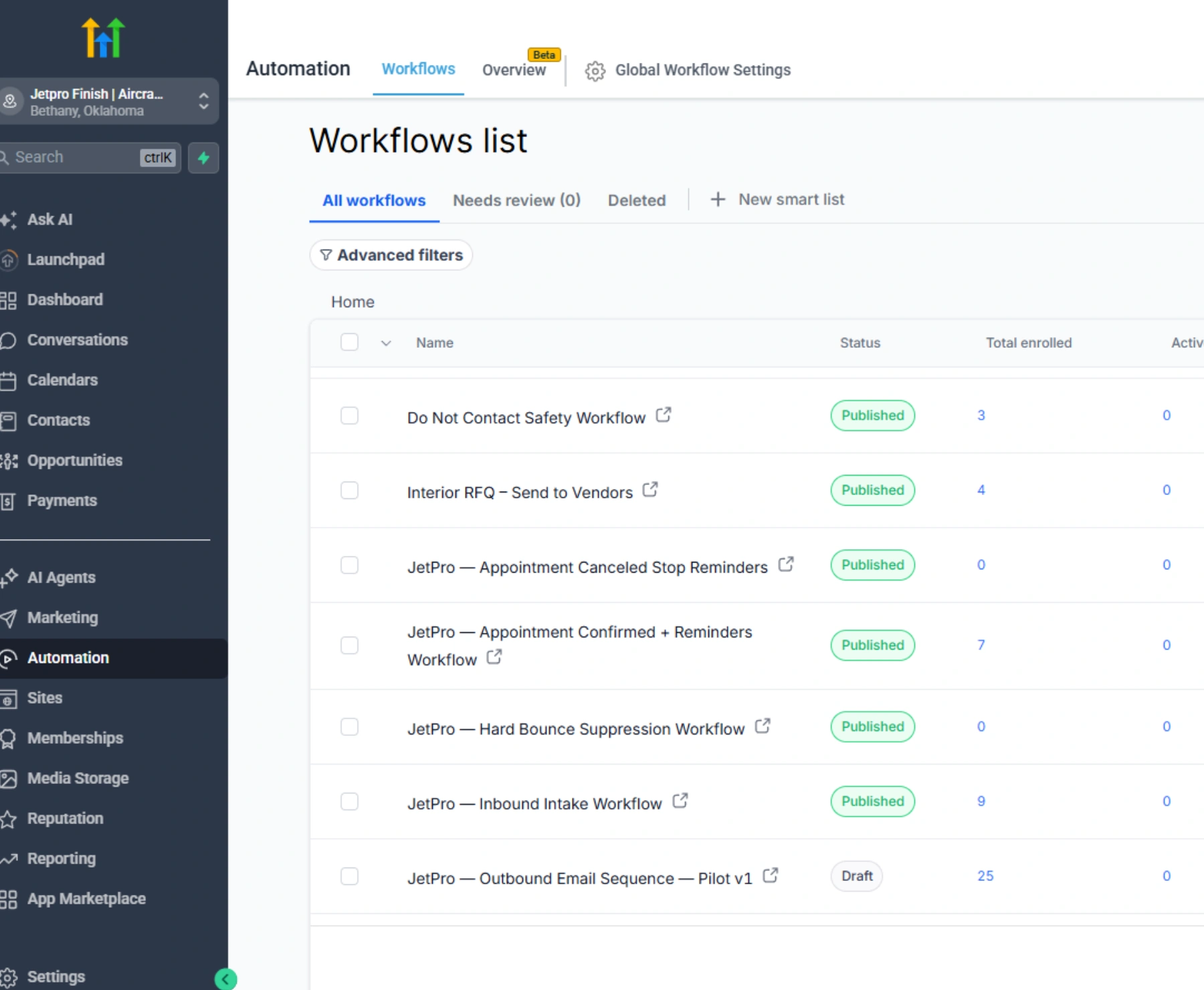
Start Here When Repetitive Work Is Slowing Your Team Down
The opportunity is not simply to use more AI. It is to identify the right business process, apply AI where it creates measurable leverage, and build the controls required for dependable use.
Your team spends hours completing repetitive, rules-based work.
Employees repeatedly copy information between documents, systems, and reports.
Document drafting and report creation take longer than they should.
Research tasks require the same steps every time.
Quality changes depending on which employee completes the work.
Your team uses AI tools, but the work remains disconnected from existing systems.
Important AI output must be reviewed before it is approved or delivered.
Employees spend too much time locating, summarizing, or restructuring information.
Internal questions repeatedly interrupt subject-matter experts.
Existing automations stop when interpretation or language generation is required.
You need automation with AI but do not want an uncontrolled black-box process.
You know AI could help your business operations but are unsure where to begin.
Apply for AI Workflow Automation Services
Tell us where repetitive work, document creation, reporting, research, quality control, or internal support is slowing your company down. We review your request to determine whether an AI workflow, task-specific agent, conventional automation, or another business system is the appropriate solution.
This is a focused system build starting at $7,500+. When you already know which process should be improved, apply for the build. When you are unsure where AI would create the most value, begin with a paid Business Systems Assessment.
AI Automation Connected to Your Real Business Processes
We design AI-supported workflows and agents around the way your company already performs important work. The AI workflow may receive information from forms, documents, databases, emails, CRM records, spreadsheets, or business applications. It can then organize, summarize, classify, draft, compare, extract, calculate, or prepare information for the next step.
Where appropriate, the workflow can create tasks, update systems, generate documents, prepare reports, route output, and request human review. We connect AI to your existing technology using platforms such as n8n, Zapier, Make, direct APIs, and the approved AI models appropriate for the project.
The purpose is not to add another novelty tool. It is to build reliable AI business solutions that quietly support real work inside the company.
What AI Workflow Automation Is Designed to Create
The AI Workflow & Agent Build creates a dependable system for completing or supporting a clearly defined business process.
Depending on the project, the completed build may include a task-specific AI agent, internal AI assistant, document-generation workflow, report-preparation system, research and summarization workflow, data-extraction or classification process, quality-control assistant, AI-supported intake process, internal knowledge assistant, or human-reviewed output workflow.
The goal is not to automate everything. The goal is to identify repeatable work where AI can reduce effort, improve consistency, shorten turnaround time, and support the people responsible for the final result.
AI Automation Services Built With Practical Guardrails
Find the Work. Design the AI Workflow. Keep It Reliable.
A practical implementation process that moves from a real operational problem to tested and documented AI workflow automation.
What You Get From Reliable AI Workflow Automation
Less time spent on repetitive administrative work.
Faster preparation of documents, reports, and research.
More consistent output across team members.
AI connected to existing business systems.
Defined human-review and approval checkpoints.
Fewer manual transfers between tools.
Better use of internal knowledge and source materials.
Clearer documentation of repeatable processes.
A workflow tested against real scenarios and exceptions.
An internal AI assistant focused on specific work.
Greater operational capacity without removing accountability.
AI business solutions the team can understand and use.
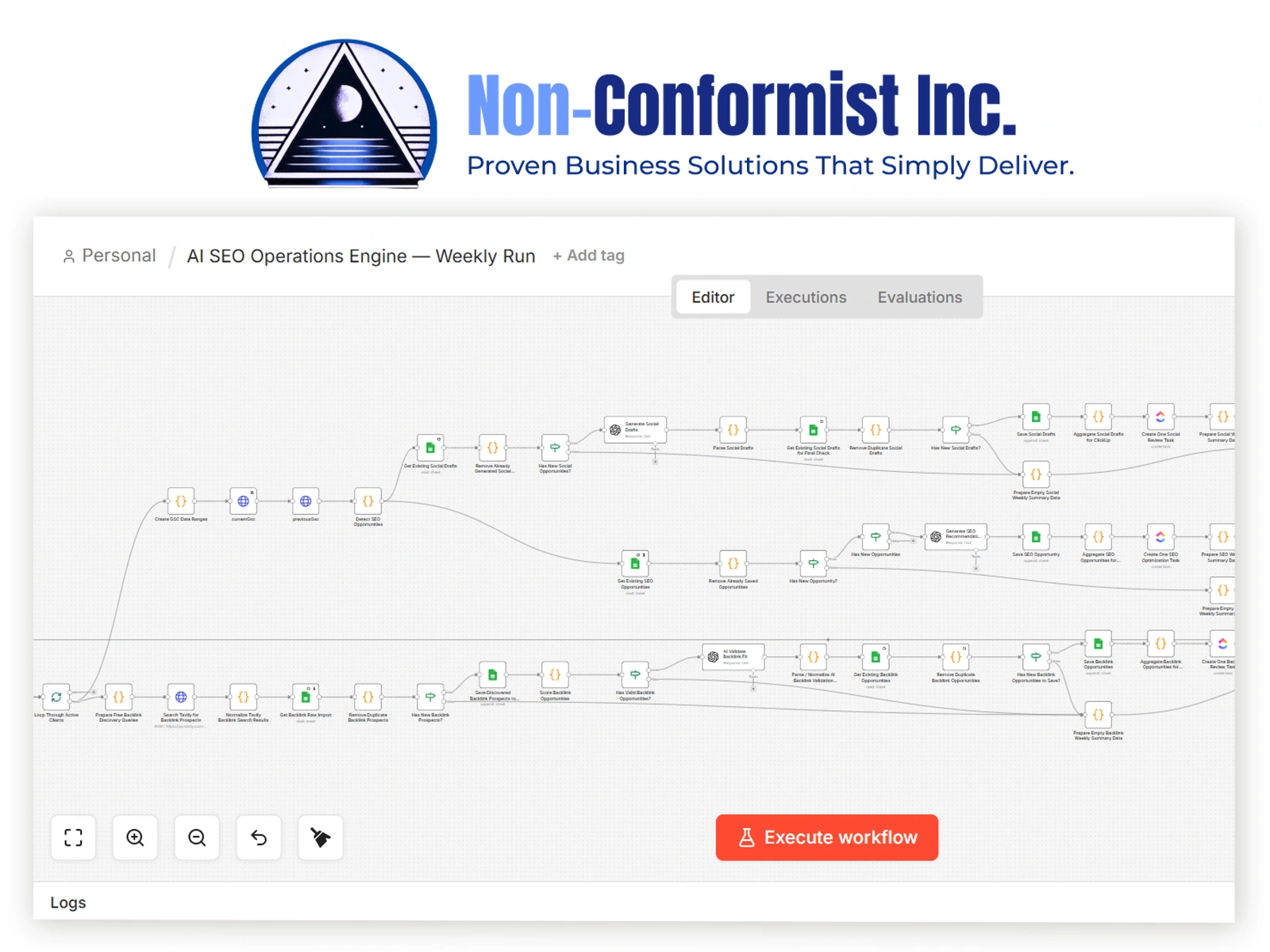
What an AI Workflow Actually Looks Like
Representative examples show how information enters the workflow, where AI performs a task, when human review occurs, and how the final output reaches the next person or system.
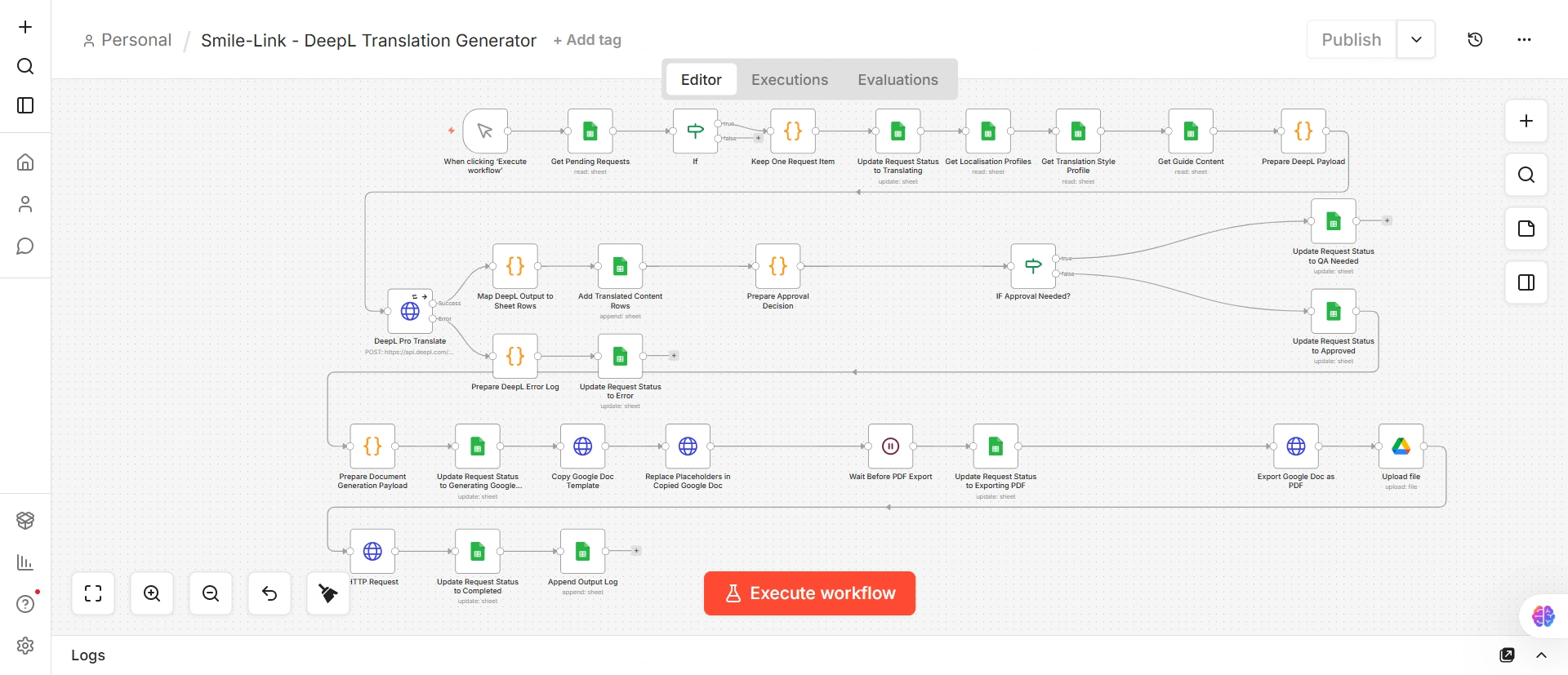
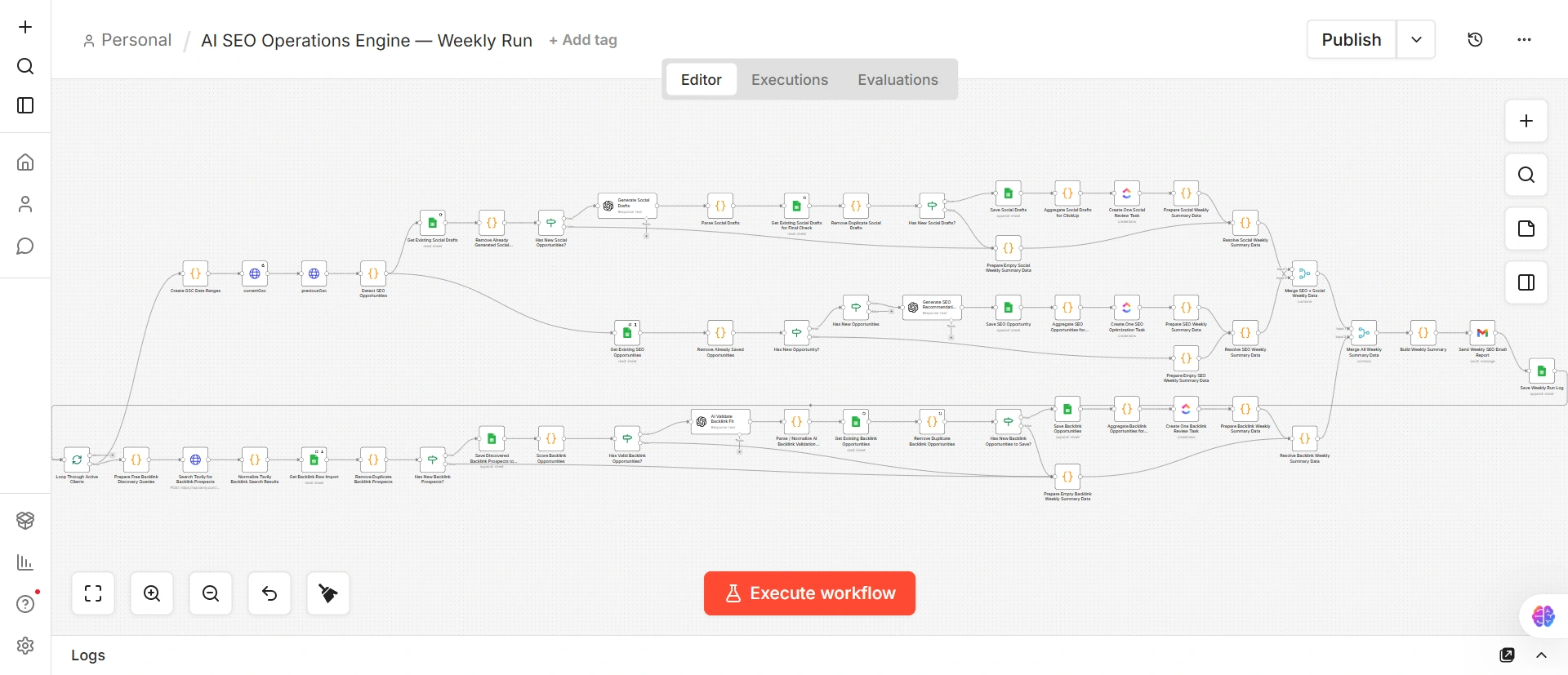
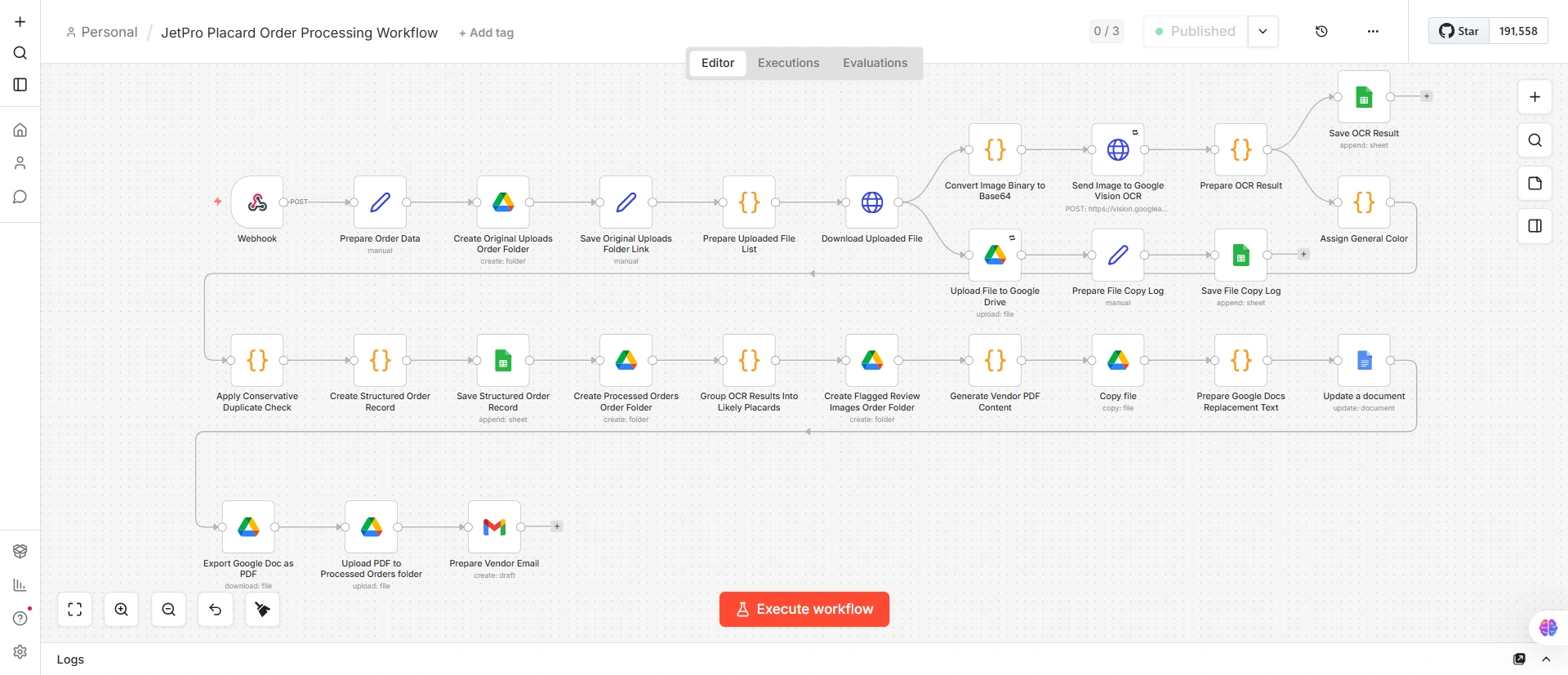
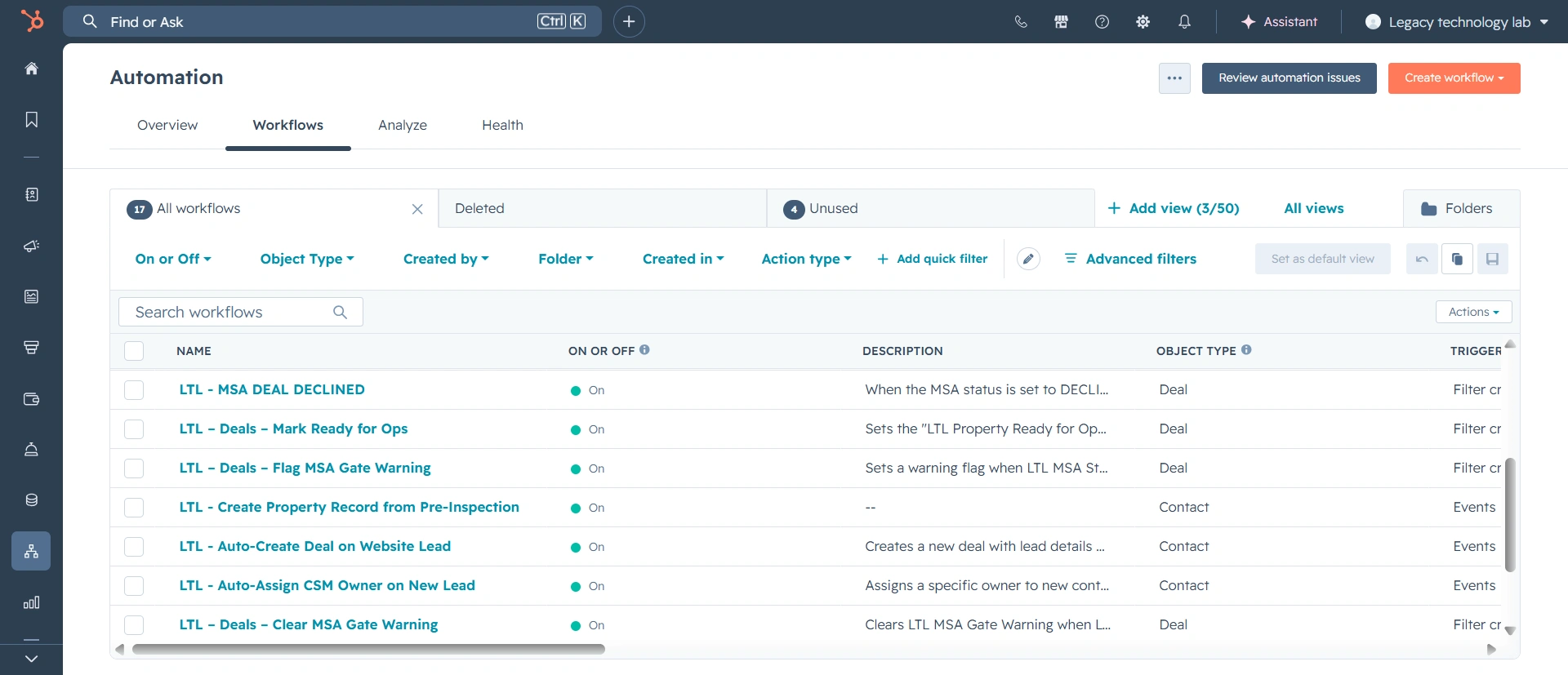
Examples shown are representative of the workflows we build. Client screenshots are used only with permission and are blurred when necessary. No fabricated metrics or results are presented.
Built for Teams Ready to Use AI for Real Business Work
This build is designed for established companies with repeatable work that consumes meaningful employee time. It is especially useful for operations-heavy teams, companies producing recurring documents or reports, businesses processing structured information, teams performing repeatable research or quality checks, and organizations that need AI-supported work with human oversight. When the underlying business process is unclear or undocumented, a Business Systems Assessment or Operations Workflow System may need to come first.
A Serious AI Automation Build for Real Operational Leverage
The AI Workflow & Agent Build is a focused implementation for companies that want AI connected to an important business process.
This is not a basic chatbot, generic prompt pack, isolated automation, or experimental AI demonstration.
The final investment depends on workflow complexity, the number of steps, data sources, business applications, required integrations, APIs, document or report requirements, prompt and rule complexity, human-review and approval stages, security requirements, testing, exception handling, documentation, and the number of teams or users.
Larger AI agent systems, document automation workflows, research systems, internal assistants, and multi-department implementations may require a larger scope.
Which path is right for you?
If you already know where AI should help — apply for the AI Workflow & Agent Build.
If you are not sure where AI would create the most leverage — start with a paid Business Systems Assessment.
AI Workflow Automation Should Connect With the Rest of the Business
AI creates more value when it begins with accurate information and returns completed work to the correct person or system. Depending on scope, the workflow may connect with your CRM, forms, website, document storage, email, reporting systems, operational tools, and internal databases.
What May Require a Separate System Build
Some projects connect naturally with AI workflow automation but require their own implementation scope. Keeping them separately scoped allows the AI workflow to remain focused, testable, and accountable.
Full CRM rebuilds or migrations
Lead capture and follow-up systems
Website or funnel rebuilds
Executive reporting dashboards
Large-scale data cleanup
Sales-asset creation
Complex operations redesign
Custom application development
Ongoing marketing campaigns
Enterprise-wide AI transformation
Multi-department knowledge systems
Advanced data infrastructure
This keeps the AI workflow focused while providing a clear path for connected systems to be added in later phases.
This Is Probably Not the Right Fit If…
The AI Workflow & Agent Build is unlikely to be appropriate when:
You only want a basic chatbot.
You are looking for a generic prompt pack.
You want to automate a process that has never been defined.
You are unwilling to include human review where accuracy matters.
You expect AI to replace management, strategy, or accountability.
You do not have repeatable work worth systemizing.
You cannot provide representative examples for testing.
You want guaranteed output without acknowledging AI limitations.
You are not prepared to maintain accurate source information.
You need an instant solution without process mapping or testing.
You are not ready to invest seriously in reliable automation with AI.
AI Automation
Questions
AI workflow automation combines artificial intelligence with defined business processes and automation rules. A workflow can receive information, perform a specific AI-supported task, route the result, request human review, and update other business systems.
Traditional automation follows fixed rules and performs predictable actions. AI can support tasks involving language, classification, summarization, extraction, drafting, comparison, or interpretation. Many effective workflows combine both approaches.
No. AI workflows can support document generation, reporting, research, internal assistance, quality checks, data classification, CRM processes, intake, and other repeatable business work.
We build task-specific agents and assistants tied to a defined business process, including research assistants, document assistants, internal knowledge assistants, report-preparation agents, intake agents, and quality-control assistants.
Depending on the project, we may use n8n, Zapier, Make, direct APIs, CRM platforms, document systems, databases, and approved AI models. Technology is selected based on the process, integrations, risk, maintainability, and required output.
Yes, when the platforms provide suitable integration or API access. The workflow may connect with CRM systems, email, forms, document storage, spreadsheets, project tools, reporting systems, and other business applications.
Reliability is improved through structured inputs, clear instructions, approved source material, validation rules, testing, exception handling, and human-review checkpoints. No AI system should be presented as perfectly accurate in every situation.
Yes, wherever risk, judgment, quality, customer communication, or final approval requires it. The workflow can pause and request review before continuing.
The objective is to reduce repetitive work and support the people responsible for the process. Employees remain responsible for judgment, customer relationships, approvals, strategy, and accountability.
Yes. AI can help extract source information, organize content, prepare drafts, populate approved structures, and route documents for review. The appropriate level of automation depends on the document, source quality, risk, and approval requirements.
AI can support repeatable research workflows by organizing approved sources, summarizing material, identifying patterns, and preparing findings for verification. Important conclusions should still be reviewed against the original sources.
AI can support quality-control processes by checking output against required sections, terminology, rules, source information, and other defined criteria. Final approval can remain with a human reviewer.
We generally need a clearly defined process, representative examples, approved source material, required outputs, business rules, exceptions, and access to the relevant systems.
The timeline depends on process complexity, integrations, data sources, testing requirements, review stages, and the number of workflow steps. Scope and implementation sequence are defined before the project begins.
Not when you already know which process should be improved. Begin with the assessment when you know AI may help but cannot identify the highest-value or most appropriate workflow.
Put AI to Work Inside a Real Business Process
Your team does not need another disconnected AI tool. It needs a reliable workflow built around work that already matters. We design AI workflow automation that connects information, business rules, intelligent processing, existing tools, and human review into one usable system. When you already know which process should be improved, apply for the build. When you are unsure where AI would create the most leverage, begin with a paid Business Systems Assessment.