
Website-to-Revenue System
A CRM-connected website that captures leads, tracks their sources, triggers follow-up, and supports your sales pipeline.
Your website should do more than look professional. It should turn the right visitors into identifiable, tracked, and followed-up sales opportunities. We build CRM websites and lead capture landing pages with clear conversion paths, properly structured forms, source tracking, automated follow-up, and reporting foundations—so every important inquiry enters your sales system with a clear next step.
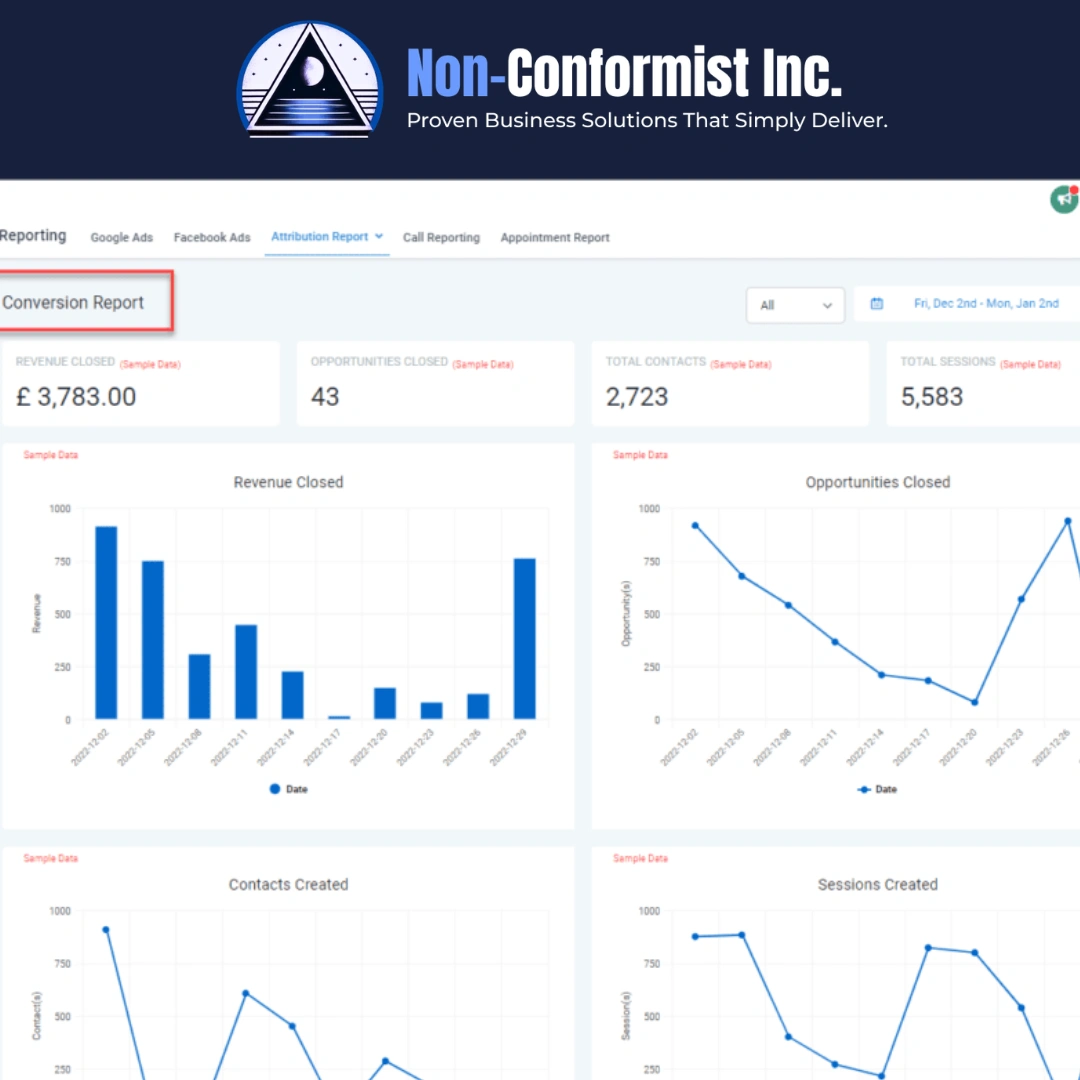
Start Here When Your Website Gets Attention but Does Not Create Trackable Opportunities
A website can look polished while still failing as a business system. The real gap is usually between visitor interest, lead capture, CRM entry, follow-up, and revenue visibility.
Your website receives visitors but produces too few qualified inquiries.
Important pages do not give visitors a clear next action.
Website lead forms send notifications but do not create complete CRM records.
Form submissions are scattered across inboxes, spreadsheets, or individual tools.
Your team cannot identify which page, campaign, keyword, or source generated a lead.
Follow-up does not begin immediately after a form submission.
Website inquiries are not assigned to a clear sales owner.
Lead capture landing pages exist, but they are disconnected from the CRM and sales process.
Paid traffic reaches pages that were not built to convert.
Leadership cannot connect website activity to leads, opportunities, or revenue.
Your current website CRM system requires repeated manual data entry.
The site explains the company but does not support how your team actually sells.
Apply for the Website-to-Revenue System
Tell us how your website attracts visitors, captures inquiries, connects with your CRM, triggers follow-up, and supports your sales process. We review every request to determine whether the right solution is a full website build, focused lead capture landing pages, CRM integration, conversion improvements, tracking, or a combination of these systems.
This is a focused system build—Website-to-Revenue System builds typically start at $7,500+. If you already know the website is where leads and revenue are being lost, apply for the build. If the underlying problem may involve your CRM, offer, follow-up, reporting, or internal process, start with an assessment.
A CRM Website Connected to How You Actually Sell
We design the website around the actions qualified visitors should take and the information your sales team needs after those actions occur. The build can include service pages, lead capture landing pages, funnel pages, website lead forms, thank-you pages, CRM routing, source tracking, automated follow-up, analytics, and reporting foundations.
When a visitor submits an inquiry, the website CRM connection records the lead, preserves available source information, assigns the appropriate owner, and triggers the agreed next step. We do not treat the website, CRM, and follow-up process as separate projects—we connect them so the website becomes a working entry point into your sales system.
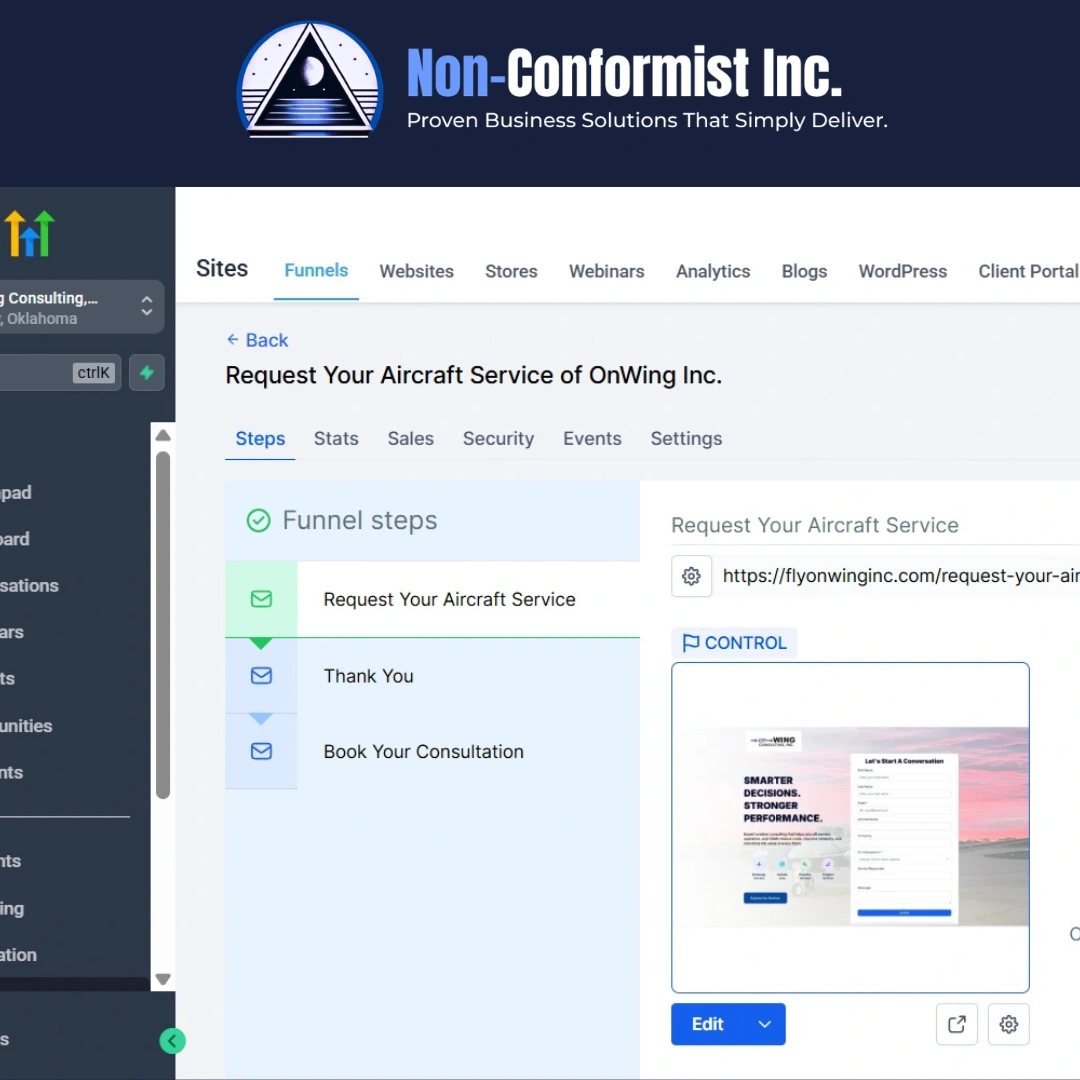
What the Website-to-Revenue System Is Designed to Create
The Website-to-Revenue System creates a connected path from visitor interest to a visible sales opportunity. Depending on the approved scope, the completed system can help your company:
Guide visitors toward clear and relevant actions.
Capture inquiries through properly designed website lead forms.
Create complete contact or opportunity records in the CRM.
Preserve available lead-source information.
Route inquiries to the correct employee or sales team.
Trigger timely email, SMS, task, call, or scheduling follow-up.
Educate buyers before they speak with sales.
Support high-ticket or longer sales journeys.
Track important conversion events.
Show which landing pages and sources create opportunities.
The goal is not only to launch a better-looking website. The goal is to create a lead capture website that contributes measurable opportunities to the sales pipeline.
CRM Websites and Lead Capture Landing Pages Built to Support Revenue
The scope is built around the buyer journey, the information your team needs, and what should happen after a visitor converts.
Map the Conversion Path. Build the Pages. Connect the Pipeline.
A practical implementation process that turns a disconnected website into a measurable lead-capture and sales system.
What You Get From a Connected Website and CRM System
Clear conversion paths for qualified visitors.
Lead capture landing pages built around specific offers.
Website forms that create usable CRM records.
Available source information attached to each lead.
Clear ownership for website inquiries.
Faster follow-up after form submissions.
Better support for longer buyer journeys.
Less manual transfer between the website and CRM.
Tracking for important conversion actions.
Better visibility into which pages create opportunities.
A technical SEO foundation for future growth.
A website that contributes to the sales pipeline instead of only presenting information.
What a Website-to-Revenue System Looks Like
These examples show how a visitor can move from a focused page into the CRM, follow-up process, and reporting foundation.
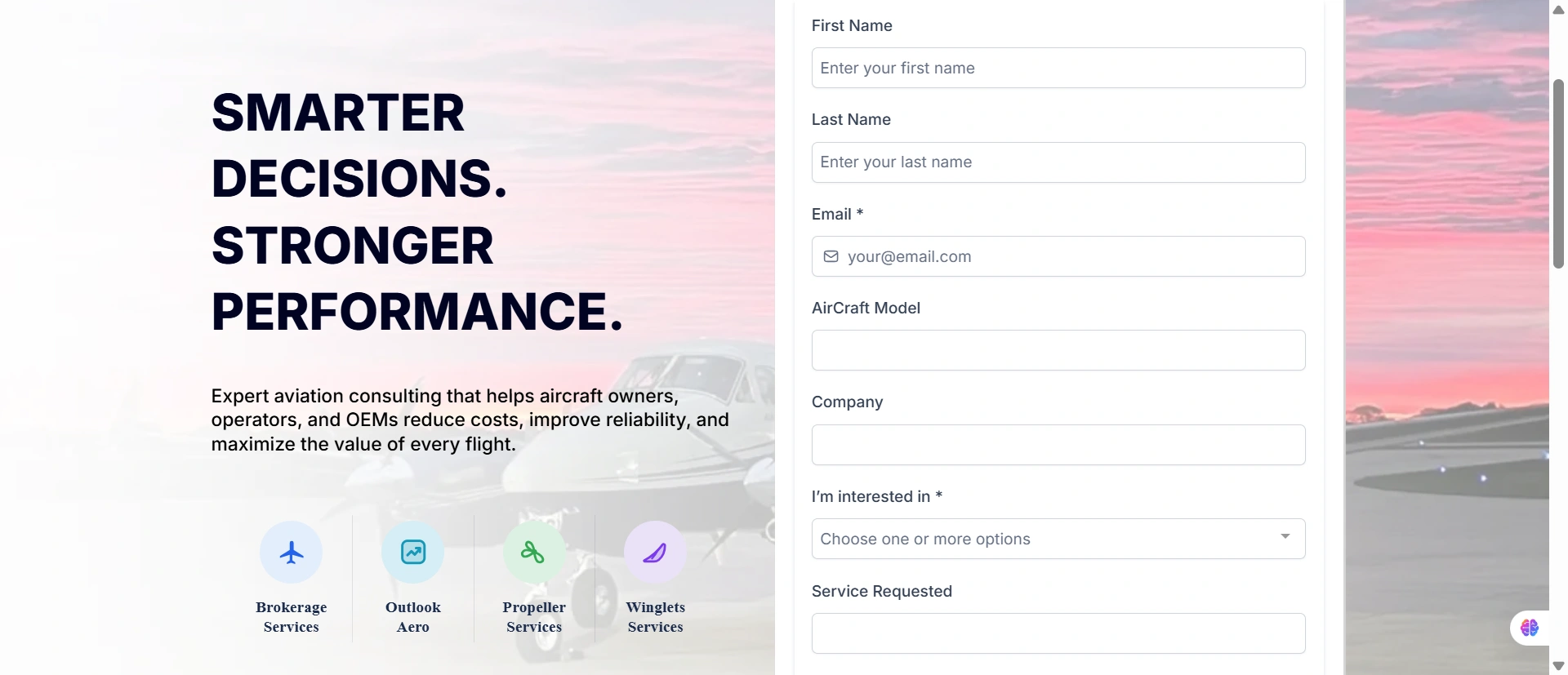
Lead capture landing pageA focused page with a clear offer, supporting proof, and one primary conversion action.
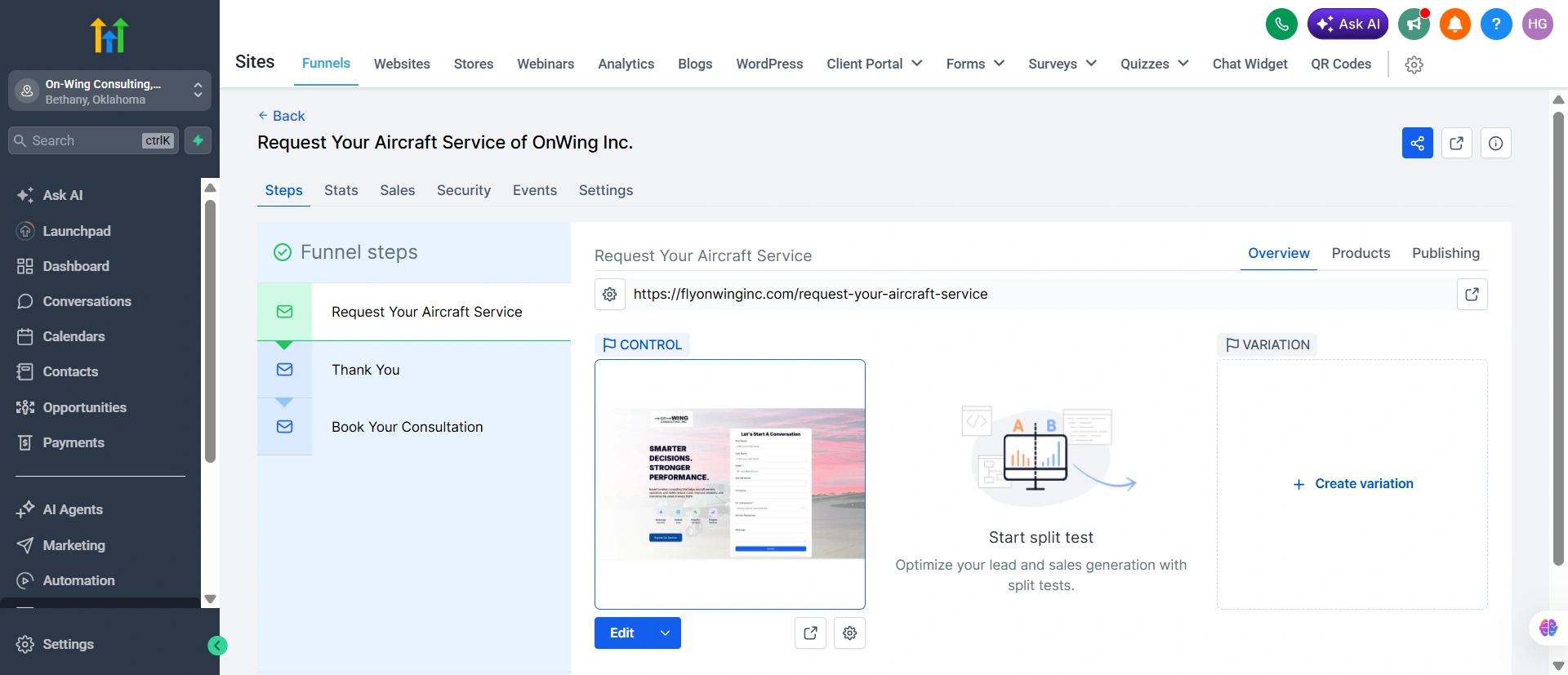
Website-to-CRM connectionA form submission creating a tracked contact or opportunity with source, ownership, and next-step data.
Examples are representative of the systems we build. Client-specific screenshots should be used only with permission and with sensitive information protected.
Built for Companies Whose Website Should Be Creating Sales Opportunities
This system is designed for established companies whose website is an important part of the buyer journey but is not properly connected to lead capture, CRM tracking, follow-up, or sales reporting. It is especially useful for service businesses, high-ticket companies, HubSpot or GoHighLevel users, teams paying for traffic without reliable conversion tracking, and companies preparing to scale lead generation. If follow-up is the primary failure point, the Lead Capture & Follow-Up System may be the better fit. If the CRM foundation is unreliable, the CRM Command Center Build may need to come first.
A Serious Website Build for Companies Focused on Revenue
The Website-to-Revenue System is a focused implementation for companies that need their website to capture, qualify, track, and support real sales opportunities.
This is not a small visual update, inexpensive template installation, single basic landing page, or isolated WordPress task.
Builds typically start at $7,500+. The final investment depends on page count, lead capture landing pages, copywriting, design complexity, forms, CRM integration, routing, source tracking, follow-up, scheduling, analytics, technical SEO, migration, and testing requirements.
Larger websites, multi-location systems, complex funnels, advanced CRM integrations, custom tools, and extensive content requirements may require a larger scope.
Which path is right for you?
If you already know the website is where opportunities are being lost, apply for the build. If the underlying problem may involve the offer, CRM, follow-up, or reporting, start with a paid assessment.
A Revenue-Focused Website Must Connect With the Rest of the Business
The website creates the strongest results when it is connected to the systems that manage the opportunity after conversion. Depending on the approved scope, the Website-to-Revenue System can connect with CRM records, lead routing, follow-up, scheduling, phone tracking, dashboards, AI workflows, and operational handoffs.
CRM structure and pipeline managementCRM Command Center Build →
Advanced lead routing and nurturingLead Capture & Follow-Up System →
AI-supported website or intake workflowsAI Workflow & Agent Build →
Conversion and revenue dashboardsDashboards & Reporting System →
Case studies, proposals, and sales materialsAuthority & Sales Asset System →
Post-sale operational workflowsOperations Workflow System →
Diagnose the highest-priority system gapBusiness Systems Assessment →
What May Require a Separate System Build
Some needs support the Website-to-Revenue System but require their own project scope. Separating these projects keeps the website implementation focused while preserving a clear path for expansion.
Full CRM rebuilds or migrationsCRM Command Center Build →
Advanced lead capture and follow-up automationLead Capture & Follow-Up System →
Executive dashboards and multi-source reportingDashboards & Reporting System →
AI workflow or agent buildsAI Workflow & Agent Build →
Complex operations automationOperations Workflow System →
Large case-study or sales-asset programsAuthority & Sales Asset System →
Complete brand-identity development
Ongoing SEO campaigns and content production
Paid advertising management
Multi-location SEO programs
Custom application development
Ecommerce systems or customer portals
The final scope is based on the website, CRM, buyer journey, tracking requirements, and the systems that must work together after conversion.
This Is Probably Not the Right Fit If…
We'd rather be upfront. The Website-to-Revenue System is unlikely to be appropriate when:
- You only need a small visual change.
- You need one basic page with no CRM integration.
- You're looking for the cheapest possible website.
- You want a brochure website with no conversion strategy.
- You're unwilling to define the offer or desired visitor action.
- You do not have a sales process the website should support.
- You do not want website inquiries recorded in a CRM.
- You're unwilling to measure conversions.
- You expect the website alone to repair an unclear offer or broken sales process.
- You want ongoing SEO, advertising, branding, and content included without separate scope.
- You're not ready to invest seriously in making the website part of the company's revenue system.
CRM Website &
Lead Capture Questions
It is a website and conversion system designed to move qualified visitors into a visible sales process. It can combine service pages, lead capture landing pages, website lead forms, CRM integration, source tracking, automated follow-up, analytics, and reporting foundations.
A CRM website is connected to the company's customer relationship management system. When a visitor submits a form or completes another conversion action, the website can create or update a CRM record, preserve available source information, assign an owner, create a task, and trigger follow-up.
Both. The project may include a complete website, selected service pages, focused lead capture landing pages, funnel pages, or improvements to an existing site. The final scope depends on the buyer journey, offers, current website, CRM, and conversion goals.
Yes. We can connect approved website forms and conversion paths to HubSpot or GoHighLevel, depending on the platform, form tools, CRM structure, and agreed scope.
Yes, when the existing design and technical foundation can support the required conversion paths, CRM connections, tracking, and follow-up. We assess which elements should be retained, improved, replaced, or rebuilt.
Yes, when included in the project scope. We can create forms that collect the information your sales team needs and connect submissions to CRM records, ownership, notifications, and follow-up actions.
Copywriting can be included in the scope. The amount of research, interviewing, offer development, page writing, case-study work, and revision required affects the final project investment.
A sound technical and on-page SEO foundation is included in the pages we build. This can include metadata, headings, internal links, crawlable content, image optimization, redirects, sitemap inclusion, and relevant schema opportunities. Ongoing SEO strategy, content publishing, location-page expansion, authority building, and link acquisition require a separate scope.
Yes, when the required tracking tools and source information are available. We can configure conversion events and CRM source fields to improve visibility into which pages, forms, campaigns, and channels generate inquiries.
Basic confirmations, notifications, tasks, email, or SMS actions may be included. More advanced nurturing, missed-call recovery, proposal follow-up, re-engagement, or multi-stage sequences may require the Lead Capture & Follow-Up System.
Phone-call tracking or routing can be integrated when the company uses a compatible call-tracking or phone platform. The exact capabilities depend on the selected software and agreed scope.
Yes. Scheduling tools can be incorporated into landing pages, thank-you pages, or follow-up workflows when booking is the appropriate conversion action.
Yes, when each page serves a legitimate audience, service, or buyer need and contains meaningful, differentiated content. Large multi-location SEO programs may require separate research, content, technical implementation, and ongoing optimization.
Builds typically start at $7,500+. The final price depends on page count, copywriting, design, CRM integration, form complexity, tracking, automation, SEO requirements, migration, and testing.
Not when you already know the website is the primary point where opportunities are being lost. Begin with the assessment when the website problem may actually be caused by an unclear offer, weak CRM structure, inconsistent follow-up, poor reporting, or a broader business-system issue.
Turn Your Website Into a Measurable Revenue System
Your website should not end the visitor journey. It should begin a visible and repeatable sales process. We build CRM-connected websites and lead capture landing pages that capture inquiries, preserve source information, route opportunities, trigger follow-up, and give your company a clearer view of what drives results.